In the complicated web development domain, a good grasp of HTTP status codes is essential for server management. Error checking is mostly done to detect problems with the site, improve the user’s experience, and reduce the load on the server. While most developers are familiar with the common HTTP status codes (such as 404 Not Found and 500 Internal Server Error), some still get confused by a 499 status code.
In this IndeedSEO guide, we will learn all about the 499 status code and how to handle it.
What is the 499 HTTP Status Code?
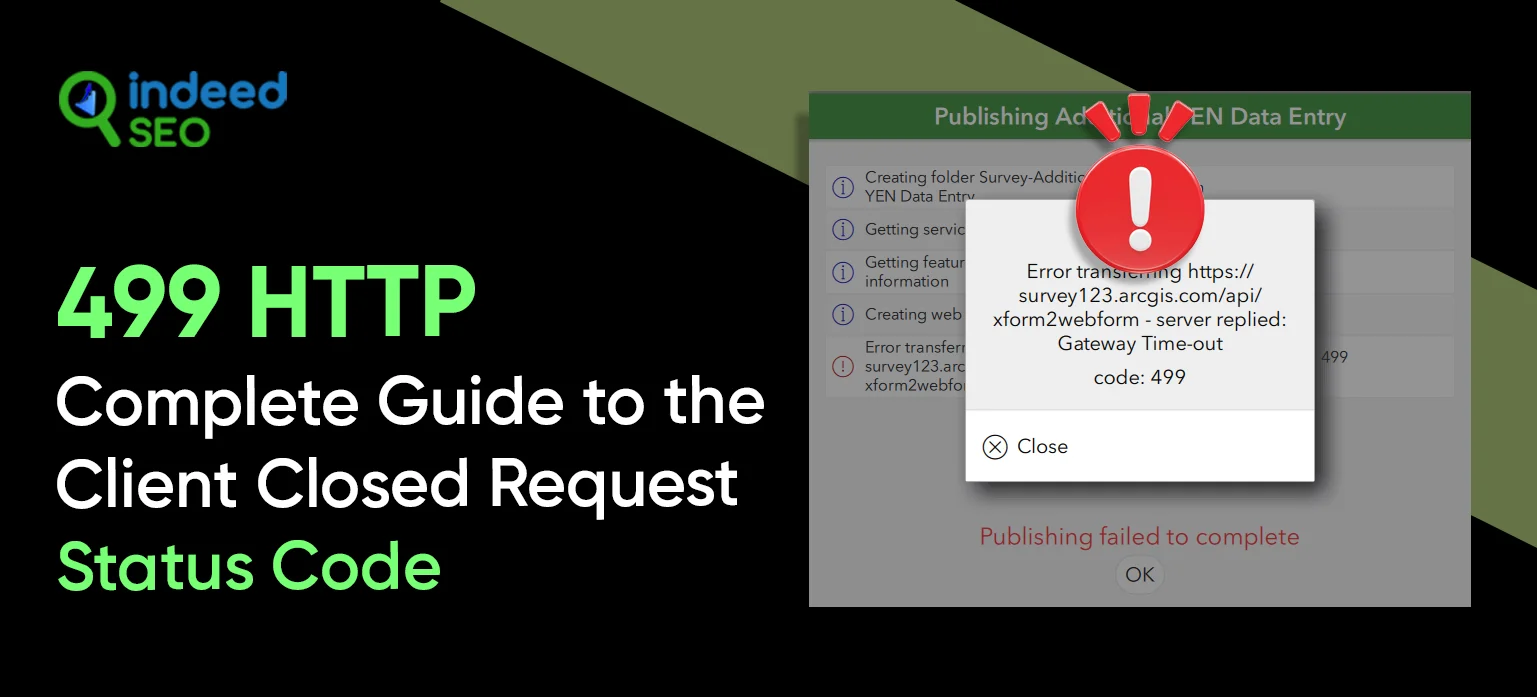
The 499 Client Closed Request status code is an unofficial HTTP status code. It originated from Nginx, a widely used web server. 499 HTTP Status Code indicates that the client terminated the connection with the server before the server could deliver a response to the client.
In other words, it tells server admins how a client (such as a browser or an app) disconnects from the server mid-request. This status code is Nginx-specific and is used only for logging purposes. Such a situation may be caused by a network break, client-side error, or user operation like closing the page before the page is fully loaded.
How Does 499 HTTP Differ from Other HTTP Status Codes?
The status code 499 Client Closed Request is non-standard and is introduced by nginx. It is to inform that the client has closed the connection before the server answers the request.
| HTTP Status Code | Meaning | Who Causes It | Key Difference |
|---|---|---|---|
| 499 Client Closed Request | Client closed the connection before the server responded | Client | Specific to Nginx, the client disconnects before the response |
| 408 Request Timeout | Server timed out waiting for client request | Server | Server-side timeout waiting for client input |
| 404 Not Found | Requested resource doesn’t exist | Client | The client requested a missing page or endpoint |
| 500 Internal Server Error | Server encountered an unexpected error | Server | Server-side fault while processing the request |
| 403 Forbidden | The client doesn’t have permission | Client/Server | Access denied due to authorization rules |
What are the Common Causes of 499 HTTP Error?
The 499 code (client closed request) is common in the Nginx logs and is unrelated to the server itself. Here are some common causes:
-
User Navigation or Actions
One could abort a request at the browser level. It can be performed by clicking a link or closing a tab, or even by refreshing a page when a request is in process. This terminates the connection at the client’s side, which causes the error.
Customers can disconnect their connection before the server answers if they have a slow or unstable connection, which may cause a 499 status.
-
Long-Running Server Requests
When a server goes too slow to process a request, clients could timeout and close the connection, particularly on large data downloads or heavy API requests.
Mobile apps tend to have more aggressive timeouts than browsers. If an API call exceeds the time limit, the application may abort the call, resulting in a 499 error.
-
Automated Bots or Crawlers
A certain automated tool might terminate connections when a reply is not obtained in time. This is typical for webscraping or calling APIs from scripts.
What are the Impacts of 499 Errors
Although a 499 error doesn’t indicate a server malfunction, frequent occurrences can have indirect consequences:
-
Performance Metrics Skewed
High 499 counts may affect your analytics, making it appear as if users are bouncing due to slow server response.
If clients abort requests multiple times, the server resources spent on processing those requests are wasted, which could result in performance degradation.
Developers new to the platform could mistake 499 errors for server-side issues, causing them to debug or change code unnecessarily.
Tips to Reduce 499 Errors on Your Website
You can’t prevent all 499 errors, but you can prevent many of them and reduce their impact:
- Improve Server Response Time
- Configure appropriate timeout values
- Process Large Requests Gracefully
- Analyze logs for monitoring
- Implement Retry Logic in Clients